MACS - Modular Architecture for Control Software

MACS - Modular Architecture for Control Software

A software development and deployment suite. Use it for HIL/SIL testing to deploying ESS control software on embedded Linux devices.

AvailableV1.0.0Q2 2026
16M
Signals / second
6μs
End-to-end latency
56
Function blocks
Open
Modify and create new nodes

MACS combines visual function-block programming, real-time signal monitoring, and full hardware-in-the-loop testing in a single Linux-native platform. The microservice architecture means each node — from CAN routing to test execution to web dashboards — runs as an independent systemd service. If one node crashes, the rest keep running.

For evaluating engineers: MACS occupies the same problem space as Vector CANoe, dSPACE, and NI VeriStand, but with a fundamentally open architecture. MACS Studio compiles its visual blocks to C for real-time performance (~39μs per update cycle measured), the test framework integrates with standard CI/CD via JUnit XML output, and custom nodes can be developed in either C or Python.

Hybrid simulation/real-ECU mode lets you seamlessly mix simulated and physical signals during a test — a workflow that commercial tools typically force you to choose between.

Available now (V1.0.0, Q2 2026). Runs on standard Linux desktops and ARM embedded targets. Supported protocols include CAN 2.0/FD, J1939, XCP, CCP, Modbus, IO, UDS, and CANopen.

Challenges we solve

What you're working around today, and how MACS addresses it.

Complex ECU modeling requires deep embedded C expertise

MACS Studio — drag-and-drop blocks, automatic C code generation. Integration time 0s.

Long test development cycles delay releases

Python test framework with real-time signal validation.

Gap between simulation and real hardware testing

Hybrid mode — seamlessly switch between simulation and real-time values.

No CI/CD integration for automotive test automation

JUnit XML output — integrates with Jenkins, GitHub Actions, GitLab.

Python too slow for real-time control loops

Visual models compile to C — measured 39μs per update cycle.

Expensive dedicated HIL simulation hardware required

Runs on standard Linux — desktop or embedded Linux ARM.

Multi-channel CAN requires separate tools and manual routing

Unified MCC node with 10-channel support, DBC auto-decoding, and virtual CAN networks.

High licensing costs for commercial tools

Open modular architecture with professional-grade capabilities.

AI integration and modelling

Generate a Python ECU template and import libraries like PyTorch or scikit-learn to train on real-time data.

It's impossible to develop your own functions and features

MACS is open — APIs in C and Python let you create custom nodes.

No remote deployment or monitoring

Deploy via SSH or through the integrated web server.

One part of the program causes a complete stop of the software

Microservice architecture — each node runs as a systemd service and restarts independently.

How do we track software requirements implementation status?

Built-in requirements management connects to test cases for coverage tracking. Requirements attach directly to MACS Studio components.

Existing tools look like Excel sheets with buttons

Modern, purpose-built UI designed for control software workflows.

Inside the platform

MACS Studio

MACS Studio

Drag-and-drop visual programming with 60+ function blocks. Simulation and real-time visualization of generated C code.

MACS Desktop GUI

MACS Desktop GUI

Qt-based system management with layered node architecture, real-time event logging, and project management.

Web Dashboard

Web Dashboard

Browser-based monitoring with REST API and WebSocket. Remote access to signals and deployment of projects.

CAN Network Configurator

CAN Network Configurator

Multi-channel CAN setup with DBC, message routing, and remote discovery. SSH-based interface detection for embedded targets.

Requirements Manager

Requirements Manager

Track requirements implementation status with linked test cases. Coverage analysis and traceability for safety-critical control software.

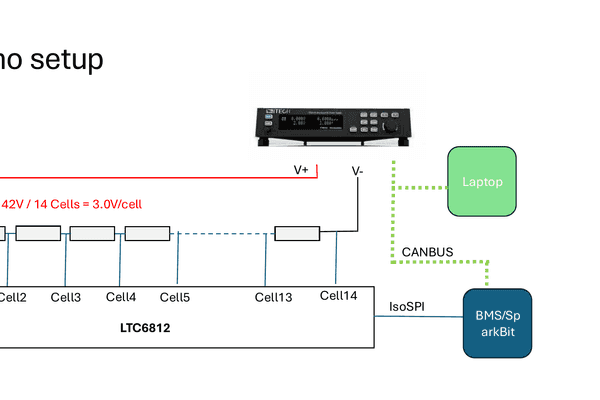
SOC + Thermal Modeling (BMS demo)

SOC + Thermal Modeling (BMS demo)

Real BMS control sheet running in simulation — OCV-initialized coulomb counting blended with voltage-based correction, plus an I²R thermal model integrated against a cooling term. 35 blocks, live at 10 Hz.

You might also like

SparkFrame

SparkFrame

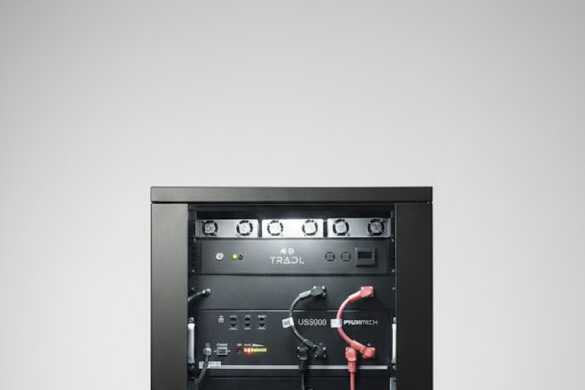
Customize your own enterprise rack.

CAN Splitter

CAN Splitter

When you looking for splitting CAN

SparkBit

SparkBit

Compact Linux industrial computer for embedded control and multi-bus sensor bridging.

Interested in MACS - Modular Architecture for Control Software?

Get in touch for a demo or quote.